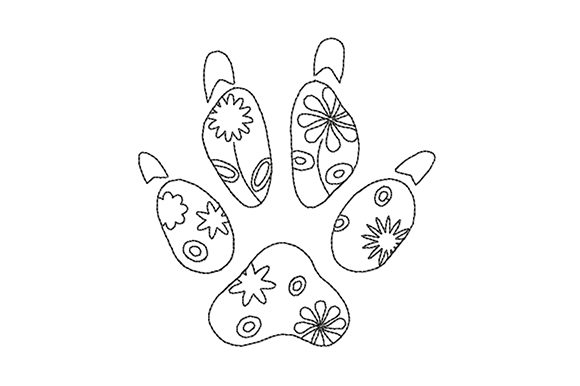
Dog Paw Prints with Flowers
A Delicate Line Design That Feels Like a Whisper—Not a Shout
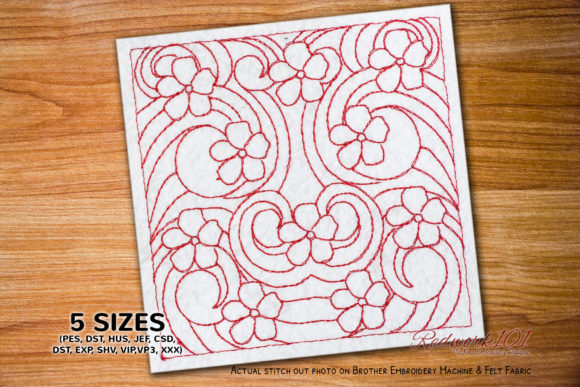
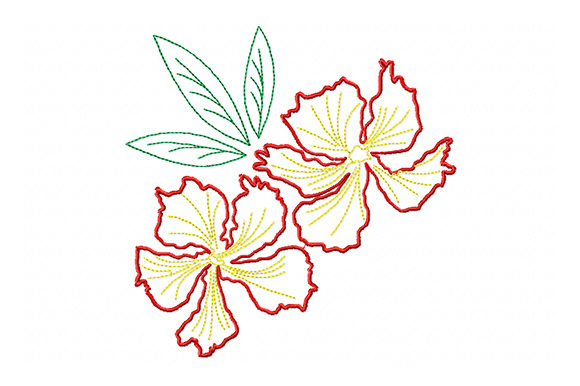
First impression? Light. Airy. Thoughtful. Dog Paw Prints with Flowers isn’t trying to dominate a garment or overwhelm a pillow cover—it’s designed to land softly, like a quiet nod to pet love and gentle botanical charm. As an outline flowers embroidery file, it leans into minimalism: clean curves, open negative space, and intentional gaps between paw prints and blossoms. There’s no dense fill stitch here—just confident running stitch lines that suggest movement and tenderness in equal measure. It feels handmade in the best way: unhurried, considered, and emotionally resonant.
Where It Truly Shines: Real Projects, Real Customers
Last week, I stitched Dog Paw Prints with Flowers onto a natural linen tote for a local pet boutique’s spring launch. We placed it low on the front panel—just above the seam—and used soft ecru thread on unbleached fabric. The result? Instant warmth. Customers paused mid-aisle—not because it screamed “look at me,” but because it felt personal, nostalgic, and quietly joyful. That’s the magic of this design: it doesn’t need volume to earn attention. It works equally well on a baby onesie (centered over the chest), a tea towel hem (repeating three times), or a denim cap side panel (scaled down 15%). As a machine embroidery design, it’s forgiving on curve-friendly surfaces—but avoid cramming it into tight cap crowns or deep pocket corners without testing first.
Fabrics & Finishes: Know When to Lean In—and When to Step Back
Dog Paw Prints with Flowers is built for delicate fabrics, as the product description rightly notes. I’ve run it successfully on lightweight cotton voile, chambray, and even silk-blend scarves—always with tear-away stabilizer and 40-weight thread. But don’t assume it’s universally safe. On terry cloth towels or thick fleece sweatshirts, the line work can blur unless you reduce density manually or add light cutaway backing. And on dark fabric? Test contrast early: pale yellow or mint thread reads beautifully on navy, but white disappears into charcoal unless you add a subtle underlay. Also—be mindful of stretch. Knits like jersey or ribbed cotton need basting + stabilizer combo; otherwise, those graceful paw outlines can skew sideways during stitching.
Small Hoop? Small Details? Proceed With Care
This isn’t a design for 3-inch hoops unless scaled thoughtfully. The original layout assumes breathing room—especially where petals meet paw pads. If you’re embroidering a patch or a baby bib, check whether tiny flourishes (like the curl at the end of each vine) resolve cleanly at your target size. I once tried it at 1.8” wide on a cotton twill patch—only to find two flower stems fused into one indistinct line. Lesson learned: always stitch a test on scrap *first*, then hold it up to natural light. Does every paw print read as distinct? Do the flowers feel balanced—not crowded, not lonely? That balance is what makes Dog Paw Prints with Flowers feel intentional, not incidental.
Commercial Use & Customer Trust: More Than Just Cute
For Etsy sellers and small shop owners, this design quietly elevates perceived value. A plain organic cotton apron becomes a thoughtful gift when Dog Paw Prints with Flowers appears just above the pocket—no text, no branding, just sincerity. Buyers recognize craftsmanship in restraint. They also notice consistency: if your shop uses this same embroidery file across nursery decor, pet memorial keepsakes, and holiday tea towels, it builds visual cohesion without shouting a logo. That subtlety translates to trust. No one questions whether it’s “handmade” or “mass-produced”—the line quality, spacing, and flow say “designed with care” before the customer even touches the fabric.
Practical Designer Notes You’ll Actually Use
- Always test Dog Paw Prints with Flowers on your exact fabric + stabilizer combo—not just “similar” material.
- Review stitch density in your embroidery software. Even simple line designs can bunch if tension settings aren’t dialed in.
- Check licensing before listing finished items or digital embroidery files for resale—this is especially critical for craft business owners and digital product sellers.
- Use black-and-white mockups to assess clarity on both light and dark backgrounds. What reads as charming in color may vanish in grayscale.
- Confirm hoop size compatibility *before* digitizing adjustments—some versions may require 4x4 minimum.
- Pair it with complementary design assets: a single paw alone, or a floral sprig variation—to build cohesive collections for your shop or client projects.
Final Thought: It’s Not Just Embroidery—It’s Emotional Texture
Dog Paw Prints with Flowers won’t win awards for complexity—but it earns loyalty through quiet resonance. It fits naturally into personalized gifts, boutique merchandise, and everyday handmade products because it speaks softly to universal feelings: affection, memory, gentleness. As an embroidery designer, I reach for it when the project needs heart more than horsepower. When the client says, “Make it feel like home,” or “I want something that honors her without being heavy,” or “This should make someone smile when they unfold their towel”—that’s when Dog Paw Prints with Flowers comes out of the folder. It’s not flashy. It’s faithful. And in the world of custom apparel and small-batch embroidery, that kind of reliability is rare—and deeply valuable.