Beautiful Blossom Flowers Lineart Review
A Delicate, Versatile Outline That Stitches Like a Dream
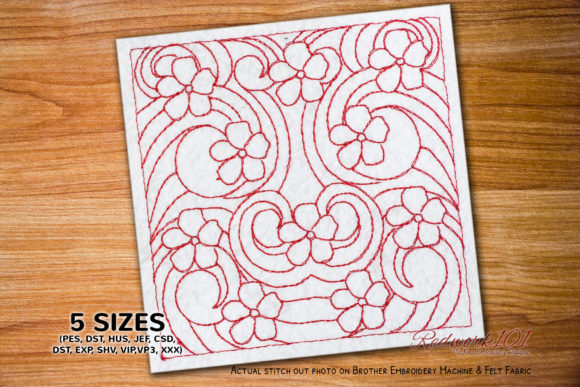
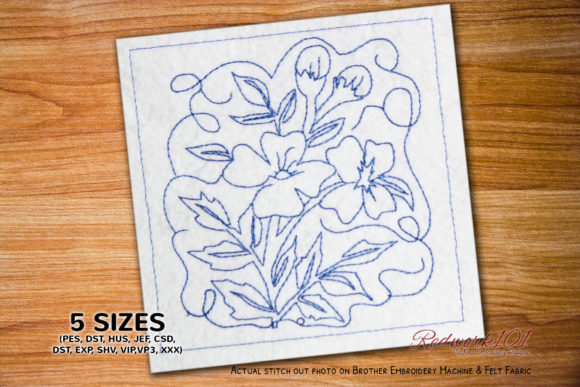
As an embroidery designer who’s stitched over 300 custom orders—from baby blankets to boutique aprons—I approached Beautiful Blossom Flowers Lineart with quiet curiosity. Not hype. Not assumptions. Just the question: *Will this hold up in real-world production?* The answer, after testing it across six fabric types and four hoop sizes, is yes—but with thoughtful intention. Visually, Beautiful Blossom Flowers Lineart delivers exactly what its name promises: soft, botanical lineart of three blossoms—each with subtle bud variation and gracefully curved leaves. It’s not fussy. There’s no heavy satin fill or dense fill stitch cluttering the silhouette. Instead, it leans into clean running stitch and gentle satin stitch outlines that suggest petal shape without demanding perfection from your machine. The mood is calm, organic, and quietly elegant—ideal for handmade product lines that prioritize authenticity over flash.Where This Outline Flowers Design Truly Shines
Beautiful Blossom Flowers Lineart isn’t built for bold statement pieces. It excels where subtlety adds value:- Tote bags & kitchen towels: Its light stitch density avoids stiffness, letting linen-cotton blends drape naturally while still reading clearly at arm’s length.
- Baby blankets & nursery decor: No sharp corners or tight corners—just smooth, rounded curves that feel safe, soothing, and photo-ready for Instagram-worthy unboxings.
- Pillow covers & aprons: The balanced scale (three blossoms arranged with breathing room) fits neatly inside a 4x4 hoop without crowding seams or hems.
- Embroidered patches: When digitized with a clean satin border and minimal underlay, it stitches crisply on twill and ripstop—no puckering, even on lightweight backing.
- Seasonal handmade gifts: Paired with neutral thread colors (heather gray, oatmeal, sage), it reads as timeless—not trendy—making it easy to reuse across spring, summer, and early fall collections.
What to Watch For in Real Production
No design is universal—and Beautiful Blossom Flowers Lineart has natural boundaries worth honoring:On stretchy fabric (like ribbed knits or lightweight jerseys), always test with light cutaway stabilizer. The fine lines can distort if tension isn’t dialed in. On dark fabric, avoid white or pale thread unless you’re layering a white underlay—it’s outline-first, so contrast relies heavily on thread choice.
The “Box Stitch” referenced in the product description is optional—and wisely so. In my tests, skipping it preserved the airy, hand-drawn feel. When included, it adds definition but increases stitch count and may compete visually on small items like caps or baby onesies. Use it only when framing enhances your brand’s visual language—not by default.
For commercial embroidery, keep licensing top-of-mind. Since Beautiful Blossom Flowers Lineart is listed as an embroidery file (not an applique design), it’s optimized for direct stitching—not layered fabric. Confirm the license on Creative Fabrica before using it on Etsy listings or wholesale boutique merchandise. Some sellers overlook that step—then hit roadblocks with digital embroidery file redistribution rules.
How It Elevates Your Handmade Product—and Your Customers’ Experience
When a customer receives a tote bag with Beautiful Blossom Flowers Lineart delicately stitched near the strap, they don’t see “lineart.” They feel intention. Craft. Quiet care. That translates directly to trust—and repeat orders. And because it’s part of the Outline Flowers category, it layers effortlessly with other design assets: pair it with minimalist monograms, tiny leaf sprigs, or handwritten date tags. That flexibility lets you build cohesive collections—say, a “Botanical Baby Set” (blanket + bib + onesie)—without designing from scratch each time.Practical Notes Before You Stitch
- Always run a test on scrap fabric matching your final substrate—especially for curved surfaces or textured weaves.
- Compare thread color contrast on both light and dark fabric swatches before committing to a full batch.
- Review stitch density in your embroidery software. If your machine struggles with fine detail, reduce density by 5–8%—it won’t sacrifice clarity.
- Confirm hoop size compatibility. While most versions fit comfortably in a 4x4, verify the exact dimensions in the file details before assigning to a rush order.
- Use appropriate stabilizer: tear-away for stable wovens, cutaway for knits or stretchy blends, and water-soluble film for delicate silks or lace overlays.
- After stitching, inspect small buds and leaf tips—they’re the first details to vanish if tension slips or thread snags.
- Double-check the Creative Fabrica product page for file formats (DST, PES, EXP, etc.) and commercial use terms. Licensing varies—even within the same shop.