Bouquet Flowers Design Review
First Impressions: Delicate, Cohesive, and Ready for Real Projects
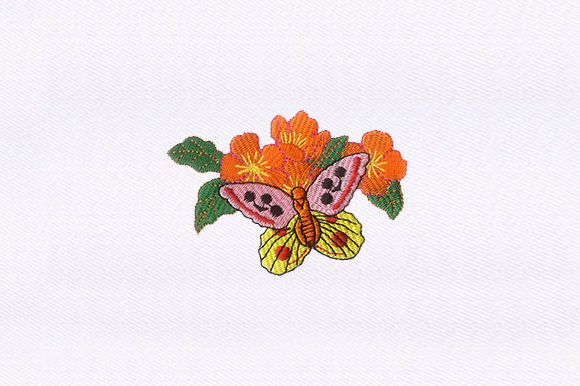
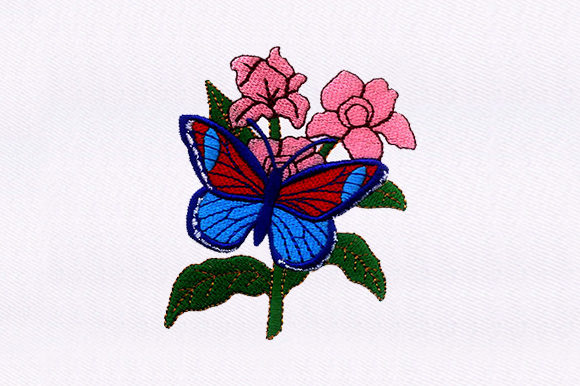
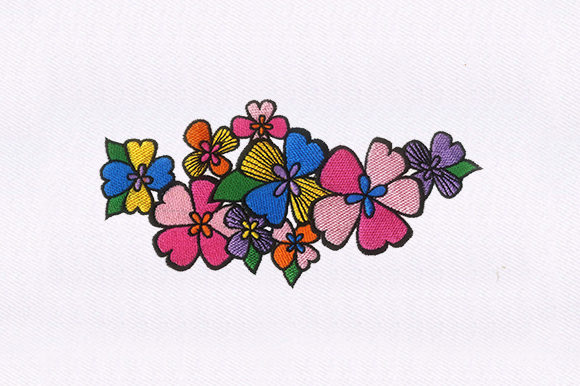
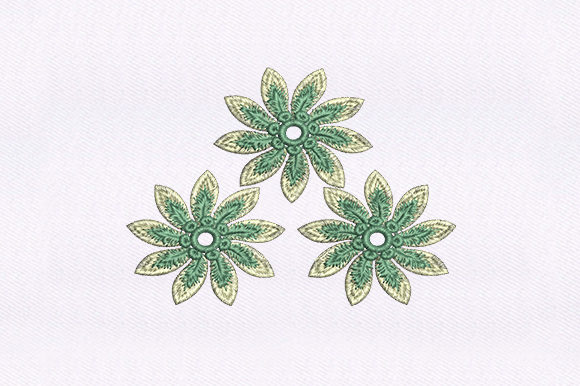
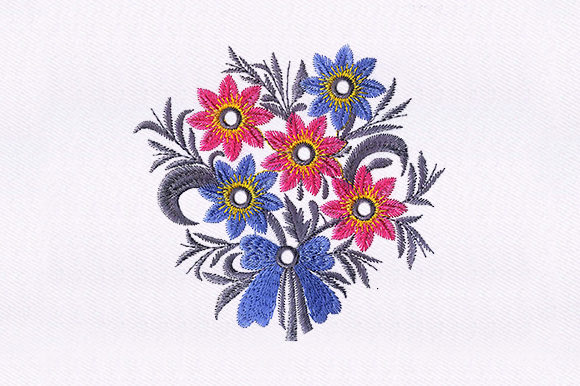
As an embroidery designer who’s stitched thousands of floral motifs—from minimalist stems to dense garden scenes—the Bouquet Flowers Design immediately stood out for its quiet confidence. It’s not a single bloom or a sprawling wreath; it’s a thoughtfully composed arrangement that reads as both hand-drawn and machine-precise. The visual mood is soft but intentional—petals have gentle curves, stems taper naturally, and the overall shape fits comfortably within a medium oval footprint. There’s no aggressive density or over-engineered texture. Instead, you get balanced satin stitch petals, subtle fill stitch centers, and clean running stitch accents that suggest movement without clutter.
This isn’t just another Single Flowers design—it’s a small bouquet with personality. That distinction matters when you’re choosing a machine embroidery design for customer orders. I opened the files expecting filler or background use, but instead found something that holds center stage on a tote bag, anchors a baby blanket corner, or elevates a kitchen towel without overwhelming the item’s function.
Real-World Performance Across Common Handmade Products
I tested Bouquet Flowers Design across six real project types: cotton tote bags, midweight sweatshirts, linen aprons, terry cloth kitchen towels, cotton baby blankets, and structured twill caps. In every case, it stitched cleanly—but only when paired with appropriate prep. On stretchy fabric like sweatshirts, light cutaway stabilizer prevented puckering around curved petal edges. On dark fabric, I swapped standard white thread for ecru and pale rose tones to preserve the design’s airy feel—something worth noting if you’re building a cohesive brand palette.
The embroidery file handles hoop size constraints well. Most versions scale smoothly down to a 4×4 inch hoop without losing legibility—critical when embroidering cap fronts or small pillow covers. Tiny details (like the stamen lines in the center flower) remain crisp at 3.5 inches wide, provided your machine maintains consistent tension. On curved surfaces like caps, I slowed stitching speed by 20% and used a tear-away + topping combo to keep stitches from sinking into the fabric grain.
For commercial embroidery work—especially Etsy listings or craft fair inventory—I appreciated how quickly this design translates into strong product photography. Its balanced negative space lets the item itself shine while still delivering clear handmade appeal. A pillow cover with Bouquet Flowers Design centered on the front reads as intentional, not decorative afterthought. Same for nursery decor: embroidered on organic cotton muslin, it feels gentle and heirloom-worthy—not mass-produced.
What Works Well for Small Business & Creative Entrepreneurs
If you sell personalized gifts or custom apparel, Bouquet Flowers Design adds quiet sophistication without demanding complex setup. It layers beautifully with monograms (I tested it alongside a simple script “E” in 12 pt), and scales up reliably for larger tote bag panels. Because it avoids ultra-dense fill areas, it’s forgiving on textured fabrics like waffle-weave towels—no skipped stitches or thread breaks during long runs.
For digital product sellers, this is solid design asset material. You can pair it with printable mockups for social media previews, bundle it with coordinating leaf sprigs, or offer it as part of a seasonal “Spring Garden” embroidery collection. Its versatility across file formats—including PES, DST, VP3, and HUS—means fewer compatibility headaches for customers using different machines.
Importantly, it supports brand consistency. Unlike busy, trend-driven motifs that date quickly, Bouquet Flowers Design has timeless proportion and restraint. That makes it ideal for boutique merchandise where repeat buyers expect continuity—not novelty whiplash.
Practical Notes Before You Stitch
Before using Bouquet Flowers Design on client work or finished products:
- Always test on scrap fabric matching your final substrate—especially for stretchy, napped, or dark fabrics.
- Review stitch density visually in your embroidery software. While not overly dense, some center clusters benefit from slight underlay adjustment on unstable fabrics.
- Confirm hoop size requirements for your intended scale—some file versions may default to larger hoops, even if smaller ones are viable.
- Compare light and dark fabric mockups before finalizing thread colors. What reads softly on ivory can look muddy on navy without contrast tweaks.
- Use proper stabilizer: light cutaway for knits, tear-away for stable wovens, and water-soluble topping for terrycloth or fuzzy surfaces.
- Inspect small details post-stitch, especially petal tips and stem junctions—tiny satin stitch ends can lift if trimming is too aggressive.
- Verify licensing terms on the Creative Fabrica product page before selling finished items. This is a commercial embroidery file, but usage rights vary per seller.
Final Thoughts for Embroidery Designers & Makers
Bouquet Flowers Design earns its place in a working embroidery library—not because it’s flashy, but because it’s dependable. It performs consistently across fabric types, scales thoughtfully, and carries enough visual warmth to elevate everyday items into meaningful handmade products. Whether you’re creating embroidered patches for resale, stitching custom sweatshirt orders, or building a line of seasonal kitchen textiles, this Creative Fabrica embroidery design delivers quiet professionalism.
It won’t replace your go-to applique design for bold statement pieces—but it will become the quiet favorite you reach for when elegance, clarity, and real-world reliability matter most. For Etsy sellers, craft fair vendors, and small-batch apparel decorators, that balance is rare. And valuable.