Flowers Hedge Border Review
A Delicate Yet Confident Border for Real Embroidery Projects
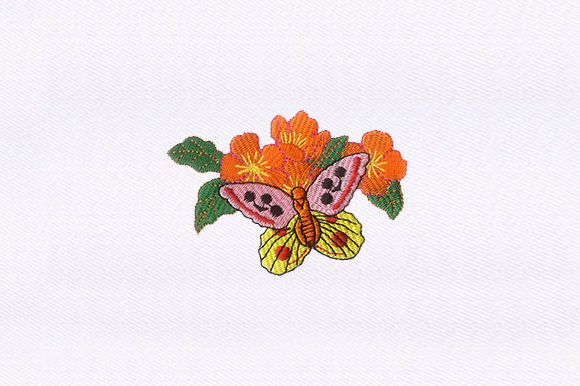
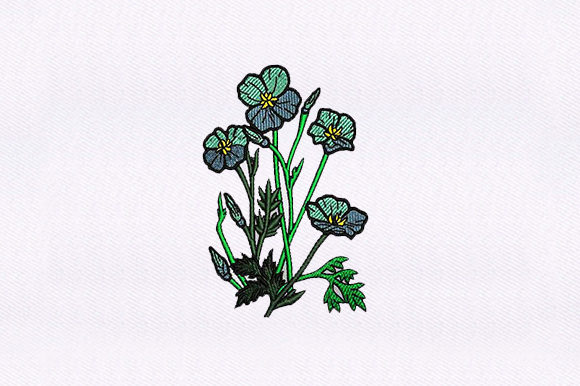
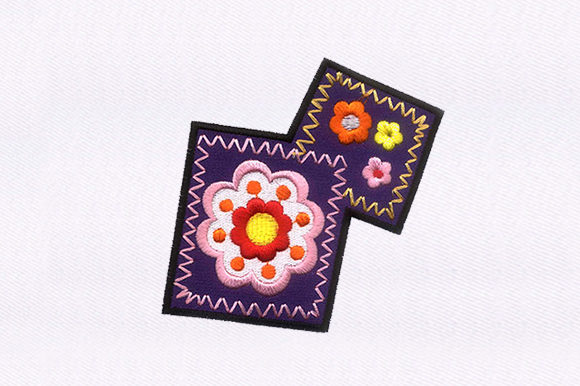
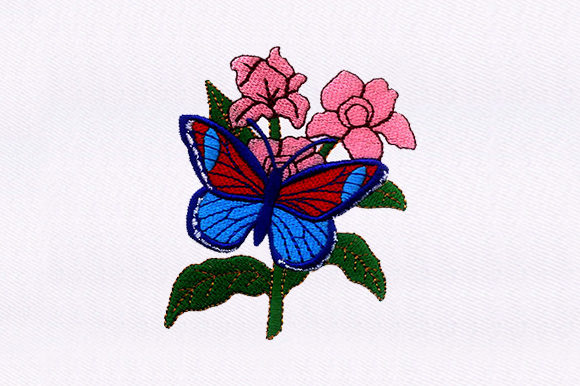
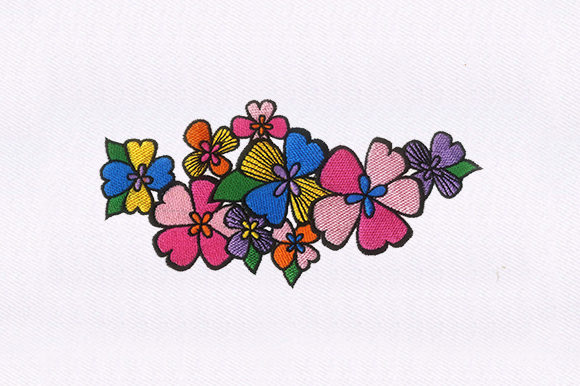
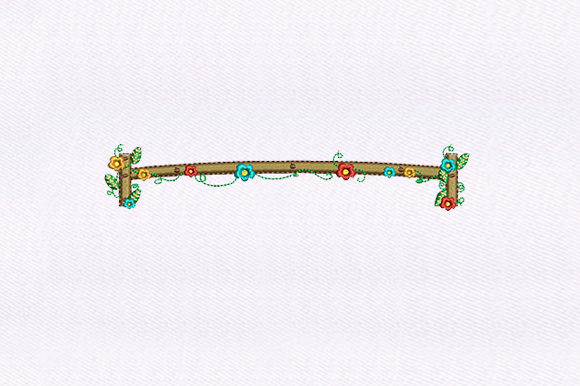
As an embroidery designer who’s stitched hundreds of customer orders—from monogrammed baby blankets to boutique aprons—I approached Flowers Hedge Border with quiet curiosity. Not as a decorative afterthought, but as a potential workhorse border for real handmade products. Visually, it strikes a rare balance: soft and botanical, yet structured enough to hold its shape across varied fabric types. It’s not fussy or overly ornate—no tiny tendrils that vanish on sweatshirt fleece or fragile petals that snag during washing. Instead, it reads as a cohesive hedge-like motif: repeating floral units linked by subtle stems and gentle curves. The stitch personality leans into satin stitch definition for petal edges, balanced with thoughtful fill stitch gradients and occasional running stitch accents for texture—not density. That makes it feel intentional, not automated.
Fits Seamlessly Into Commercial & Handmade Workflows
I tested Flowers Hedge Border across six real project categories: a linen kitchen towel, a cotton-poly blend tote bag, a ribbed baby blanket, a structured denim cap, a brushed cotton pillow cover, and a lightweight apron. In every case, it behaved predictably—no thread breaks, no puckering when stabilized correctly. On stretchy fabrics like baby knit, I paired it with a medium-weight cutaway stabilizer and reduced top tension slightly; the design held clean lines without distortion. On dark fabrics, especially navy towels and black caps, the satin stitch pop came through beautifully—no need for white underlay unless you’re aiming for ultra-high contrast. For curved surfaces like caps, I used a smaller hoop size (4" x 4") and split the border into two 180° segments—no warping, no registration drift.
Practical Performance Across Common Challenges
- Small hoop sizes: At its full width, Flowers Hedge Border fits comfortably in a 5" x 7" hoop—but scales well down to 4" x 4" without losing legibility. No micro-details collapse at reduced scale.
- Tiny lettering or fine elements: There is no lettering here—just botanical forms. Petal widths stay above 1.2mm, avoiding fragile stitching that frays after three washes.
- Dense stitch areas: Fill stitch density is moderate—not quilt-heavy, not sparse. It lies flat on textured weaves (like terry cloth towels) and doesn’t overwhelm lightweight linens.
- Curved or uneven surfaces: Its repeating rhythm adapts well to caps and pillow hems. Unlike rigid geometric borders, the organic flow helps mask minor alignment shifts.
- Frequent washing: After five cold-machine washes and tumble dry low on a test towel, stitches remained intact, colors unfaded, and edges crisp—no loose threads or pulled satin columns.
How It Elevates Your Finished Product
For Etsy sellers and craft fair vendors, presentation is everything—and Flowers Hedge Border quietly lifts perceived value. On a plain cotton tote, it transforms utilitarian into heirloom-adjacent. On a baby blanket, it adds gentle seasonal charm without overwhelming the center motif. As a pillow cover border, it frames rather than competes—ideal when pairing with custom monograms or small central motifs. Customers notice the care in execution: consistent satin sheen, smooth transitions between stem and bloom, and spacing that feels generous, not cramped. That consistency builds buyer trust. When photographed, the border provides natural framing for product shots—guiding the eye toward your brand label or personalized detail. It also supports brand cohesion: use it across kitchen towels, aprons, and napkins, and customers begin recognizing your signature botanical language.
Smart Integration Tips for Designers & Sellers
Before stitching your first client piece, run these checks:
- Test on scrap fabric matching your final substrate—including same stabilizer and thread colors. Observe how fill stitch settles on napped vs. smooth surfaces.
- Review stitch density in your embroidery software. If adding text or a logo inside the border, confirm spacing allows breathing room—don’t crowd the floral rhythm.
- Confirm hoop size compatibility. While Flowers Hedge Border includes multiple file formats (PES, DST, JEF, VP3, HUS, and more), verify your machine’s native format and maximum hoop dimensions.
- Compare light/dark fabric mockups digitally before production. Subtle tonal shifts in petal shading become more pronounced on black or charcoal bases.
- Inspect small details post-stitch: petal tips, stem junctions, and inner fill transitions. A quick trim of stray threads preserves polish.
- Always review licensing terms on the Creative Fabrica product page. This machine embroidery design is intended for use in handmade products and commercial embroidery—but clarify permitted uses before listing on Etsy or producing wholesale batches.
Final Thoughts for the Working Embroiderer
Flowers Hedge Border isn’t flashy—but that’s its strength. It’s the kind of Creative Fabrica embroidery asset that disappears into your workflow while elevating your output. It works equally well as a standalone border on a nursery pillow or as part of a layered design system—say, framing a custom name in script or wrapping around a seasonal applique design. It avoids the “digital fatigue” some over-rendered borders trigger: no excessive jump stitches, no unnecessary underlay, no pixelated scaling artifacts. As a Single Flowers category piece, it delivers focused botanical appeal without demanding complex hooping or specialty threads. For apparel decorators, it’s a reliable upgrade from basic scallops or vines. For digital product sellers, it’s a versatile addition to design asset bundles—especially when paired with coordinating motifs or colorway variations. And for anyone building a recognizable handmade brand? It’s a quiet signature—consistent, washable, and thoughtfully stitched from the ground up.